
EMAIL SUPPORT
dclessons@dclessons.comLOCATION
USVerifying Leafs
The leaf switches in Cisco ACI fabric provide connection for the servers, which can server as hypervisor hosts in the data center. Servers can be rack-mount units, such as Cisco UCS C-Series, or blade servers, as Cisco UCS B-Series.
To benefit from the Cisco ACI fabric functionalities, servers should have dual-homed connection to the leaf switches, as in this figure:
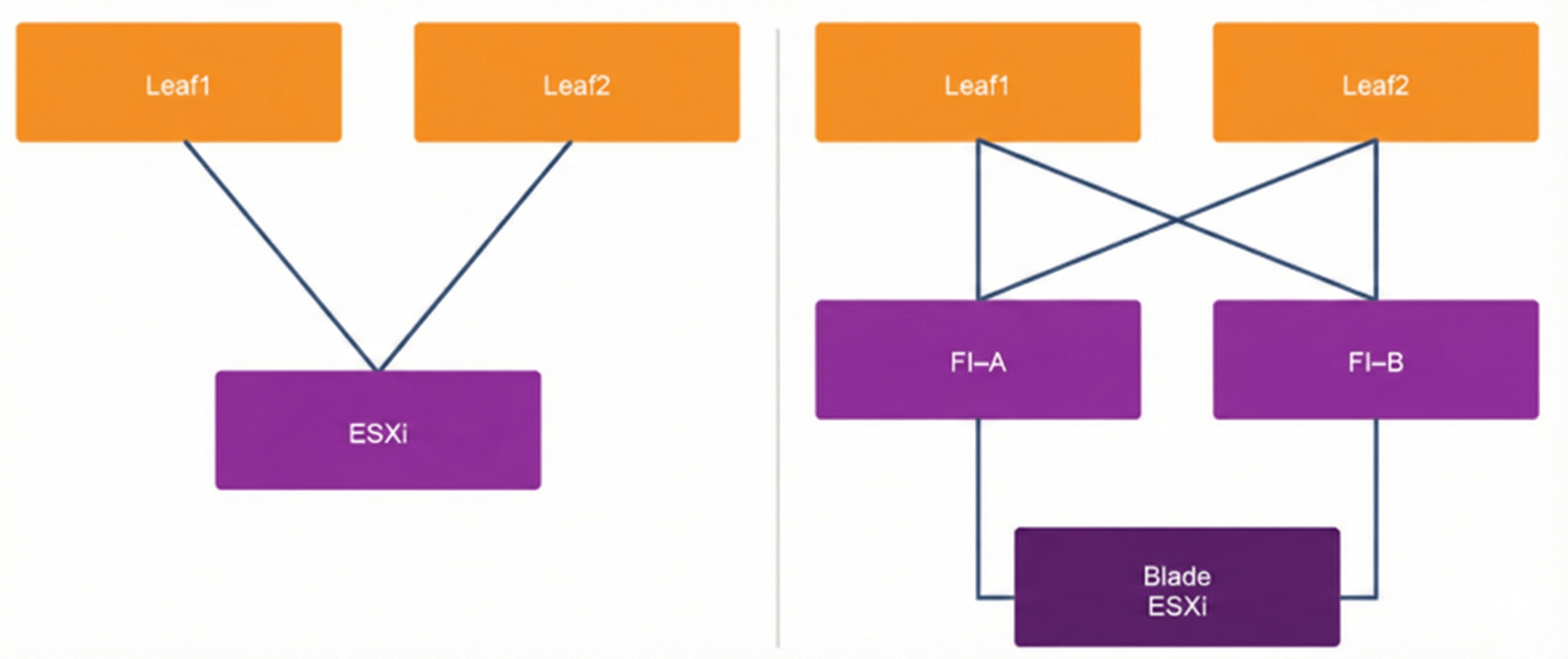
To utilize both uplink connection from the server to the Cisco ACI fabric, you can use MAC pinning or Link Aggregation Control Protocol (LACP) configuration to have active-active uplinks. However, if you are using Cisco UCS blade servers, you can only implement MAC pinning on the server side for active-active configuration. That is because Cisco UCS Fabric Interconnects do not support LACP or vLACP on the southbound ports towards the blade servers.
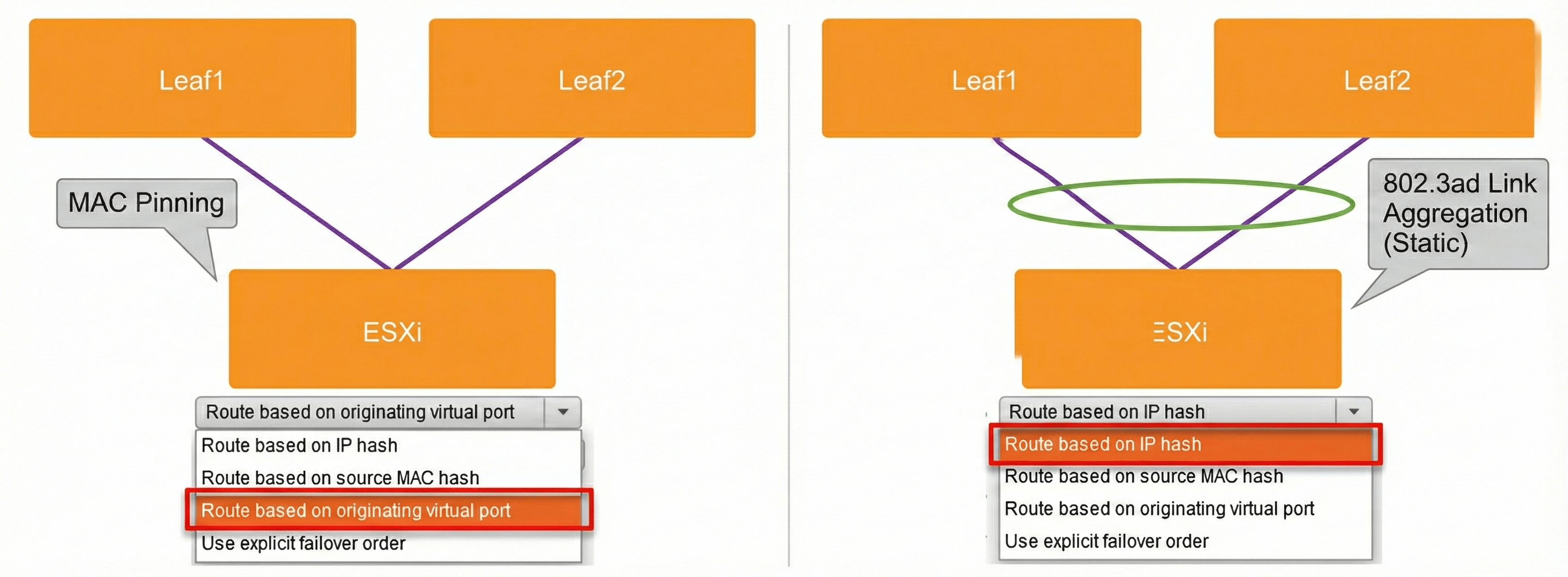
With Cisco UCS blade servers, the server links (vNIC on the blades) are associated with a single uplink port, which referred as pinning, while the selected external interface is called a pinned uplink port. You can configure a static or dynamic pinning process when you configure the vNICs. When using LACP, the load-balancing method for active-active uplinks can be based on the IP hash.
When you are using MAC pinning (virtual port-based pinning) for load balancing and uplink port resiliency, a virtual machine (vNIC) is (source-based) pinned to an uplink and it will use it, as long as no failure occurs. Depending on the configuration, re-pinning can be performed on the new uplink on link failure. Thus, with MAC pinning, you can influence the virtual switch behavior on the hypervisor, without additional configuration on the fabric switch, which avoids errors during manual configuration.
Videos

Comment
TABLE OF CONTENTS
RECENT POSTS
- Exploring Cisco ISE Authorization Policy Elements
- Understanding Cisco ISE Authentication and Authorization Policies
- Installing Context-Aware Network Access Control using Cisco ISE Policies
- Designing Network Access Control that is Scalable using Cisco ISE Architecture
- Enterprise Network Access Control and Policy Enforcement using Cisco ISE
- Secure Device Administration and Network Access Using AAA Architecture
- Designing Enterprise-Class Hybrid Cloud Connectivity Using AWS Networking Services
- Exploring Core AWS Networking and Messaging Concepts for Modern Cloud Architectures
- Understanding Key AWS Services for Modern Cloud Architectures
- Building a Strong AWS Foundation with Amazon S3, EC2, and Virtual Private Cloud



LEAVE A COMMENT
Please login here to comment.