
EMAIL SUPPORT
dclessons@dclessons.comLOCATION
USSD-WAN VeloCloud Traffic Flow
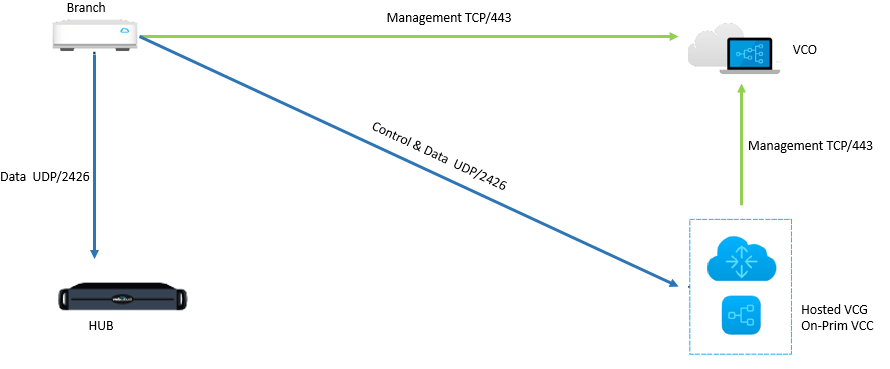
Before we talk about how talk to SD-WAN network Branch and how migration is done, let’s understand what ports and Protocols are being used for communication on SD-WAN NSX VeloCloud environment.
Ports & Protocols for Communication:
- Branch to VCO ( Orchestrator ) : for Management , TCP/443
- Branch to Hub : data Traffic UDP/2426 ( tunnel to hub is created )
- Branch to Hosted VCG or On-Prim VCC : Control and data UDP/2426
- Hosted VCG or On-Prim to Orchestrator : TCP 443 for Management
SD-WAN Reference Topology:
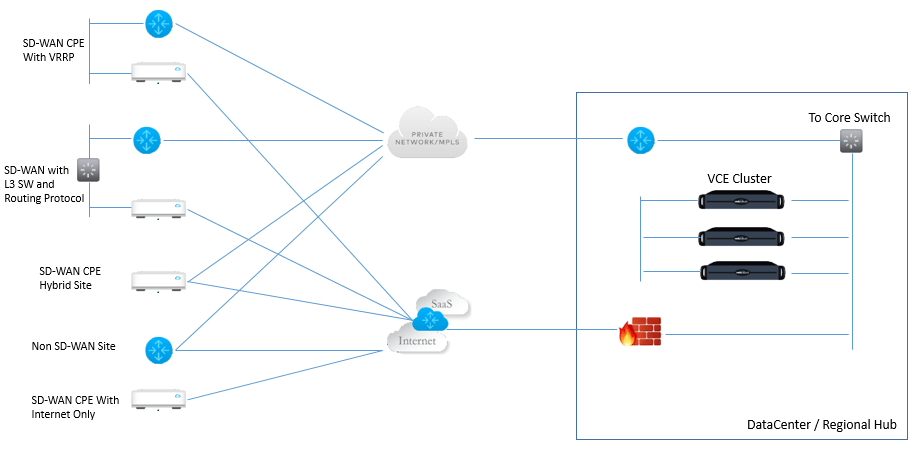
Below topology will explain how NSX SD-WAN are connected by different method, how SD-WAN CPE is connected to MPLS and Internet via VRRP, How SD-WAN with L3 switch is connected, How Hybrid SD-WAN site is connected and How Non SD-WAN site is connected with SD-WAN CPE Internet connection.
Below is the figure that explains that:
HUB VCE Placement:
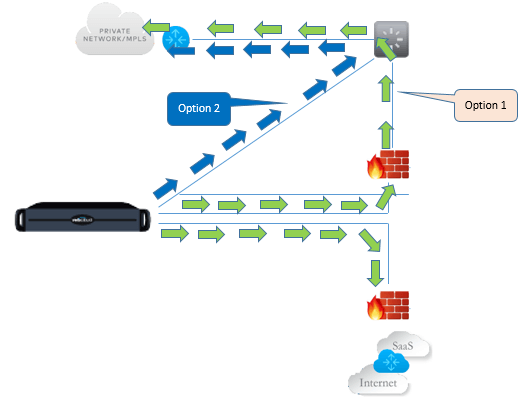
There are two options to which HUB can create Tunnel:
- Option1: Route the private tunnel traffic through the firewall
- Option2: Route the private tunnel traffic directly to the L3 core
Migration Work Flow
Following are the Migration flow of any WAN sites which has to be migrated from Typical WAN to SD-WAN using VeloCloud technology.

Comment
-
FM
This is one of the most effective online courses on sd wan velocloud. It has step by step guide on the SD-WAN network Branch and how migration is done. To make things easier they have also explained ports and protocols needed to make this course easy even for laymen.
-
VN
Based on my experience, I can say that the course will help you gain an understanding of architecture and usage. It is very important if you work in network operations. This course has helped me know how to build an extensive hands-on lab in which you enable core SD-WAN features, such as ensuring application performance using business policies are used.
TABLE OF CONTENTS
RECENT POSTS
- Understanding Cisco ISE Authentication and Authorization Policies
- Installing Context-Aware Network Access Control using Cisco ISE Policies
- Designing Network Access Control that is Scalable using Cisco ISE Architecture
- Enterprise Network Access Control and Policy Enforcement using Cisco ISE
- Secure Device Administration and Network Access Using AAA Architecture
- Designing Enterprise-Class Hybrid Cloud Connectivity Using AWS Networking Services
- Exploring Core AWS Networking and Messaging Concepts for Modern Cloud Architectures
- Understanding Key AWS Services for Modern Cloud Architectures
- Building a Strong AWS Foundation with Amazon S3, EC2, and Virtual Private Cloud
- Understanding the ENSDWI Course: Advanced Cisco SD-WAN (Viptela) Concepts



LEAVE A COMMENT
Please login here to comment.